February. Work continues on our house.
And when I say work, I mean a complete refurbishment. Other than the kitchen — which was replaced late last year — every room in the house is being altered with new walls, doors, floors and furniture. At the moment everything we own is crammed into garages and the loft while builders move through the house with drills, sanders and tile cutters.
For the duration we’ve been living with my mother-in-law in the small house we built for her in our garden last year. As you can imagine, these have been… interesting times.
It’s not just the constant and seemingly unlimited number of micro-decisions about grout colours, paint finishes and exactly where the sockets should go. Or keeping track of contractors who are late, missing entirely, or suddenly reappear asking for payment. It’s also the reality of cramming a whole family into what is essentially a tiny house — originally designed for one Babcia — while also accommodating weekend visits from her grandson with Asperger’s.
After a while it can all feel a bit intense. So when the project could tolerate my absence, I quietly siphoned off a little of the budget and made myself scarce, leaving G to deal with things (while she continues working full-time — which hardly seems fair).
In February I managed three separate trips: Budapest, the Baltic coast of Poland and Vienna. The Baltic trip was planned for half-term so that our daughter could come for a break to escape the sound of hammering and the builders’ constant soundtrack of the awful Eska FM. The other two were short solo trips — four days each — staying in cheap accommodation and travelling with little more than a few pins dropped in Google Maps and a couple of cameras.
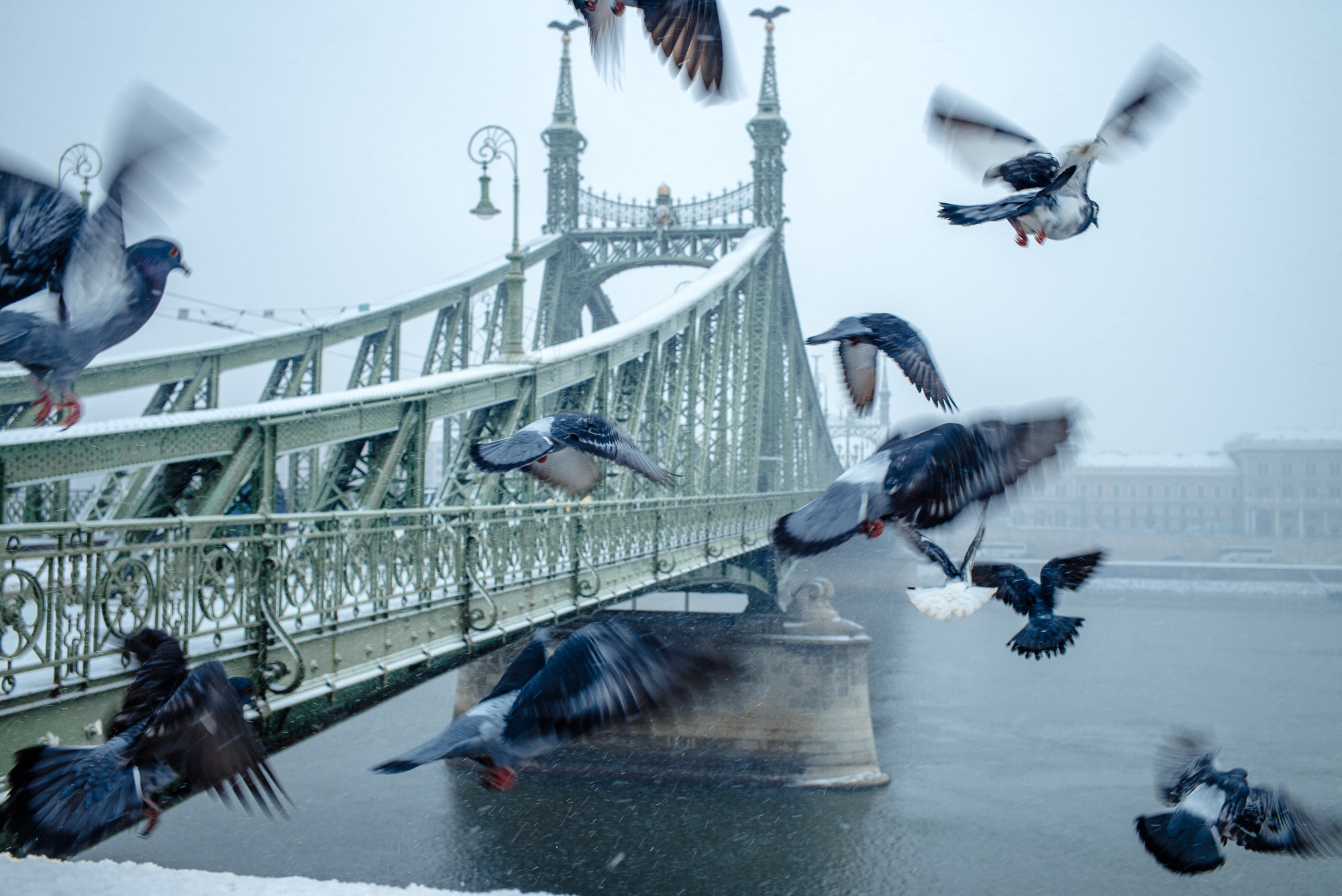
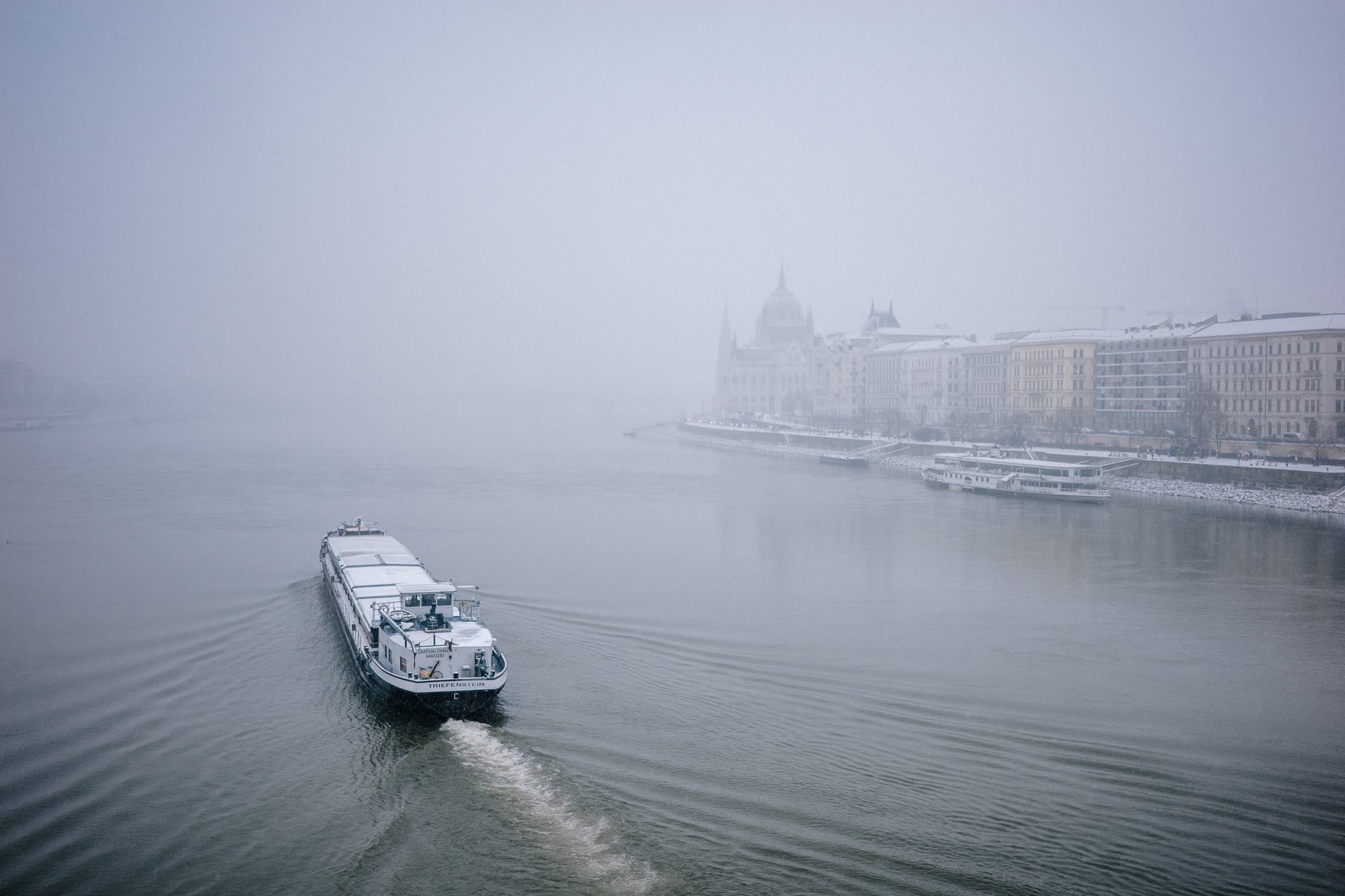
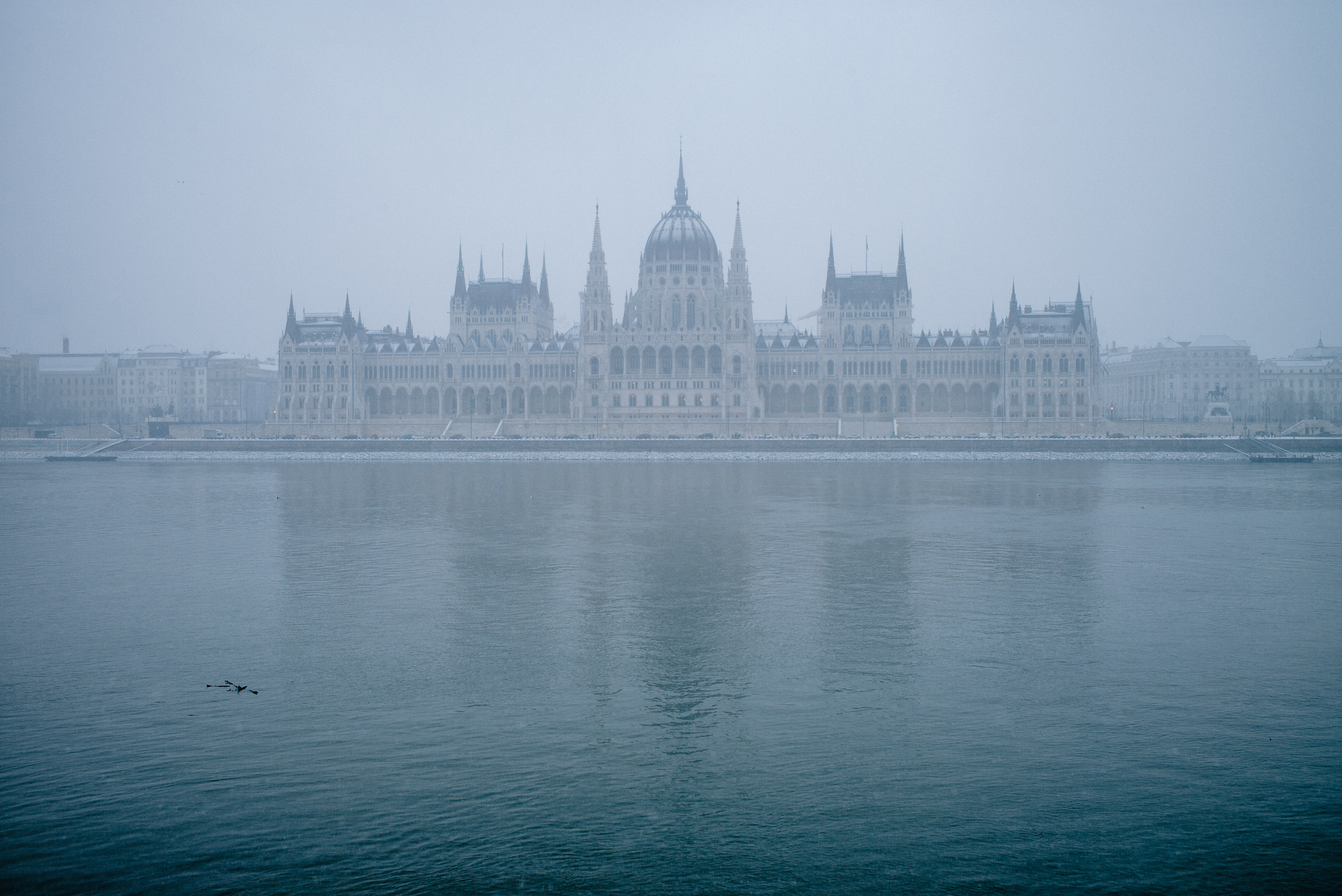
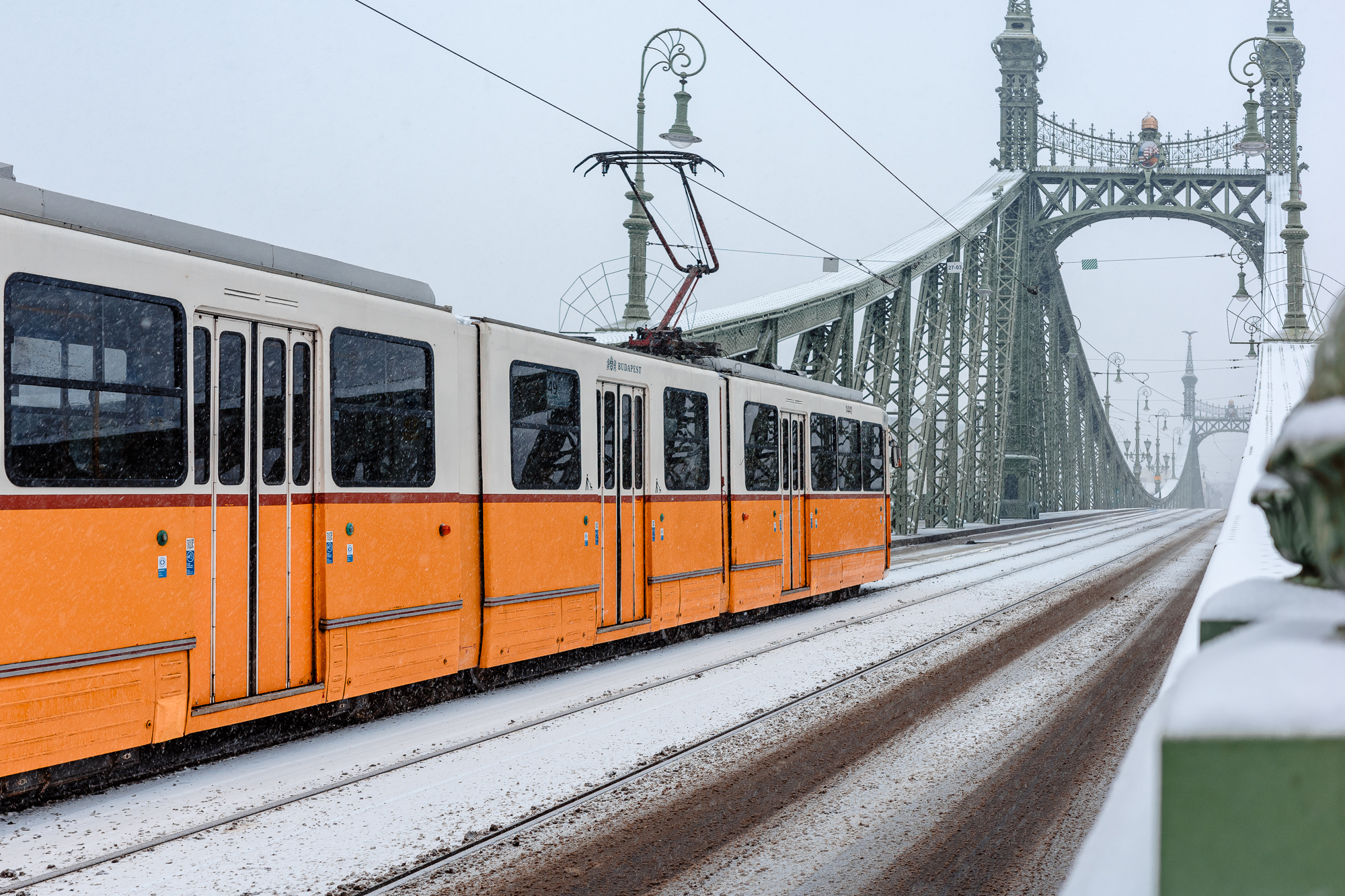
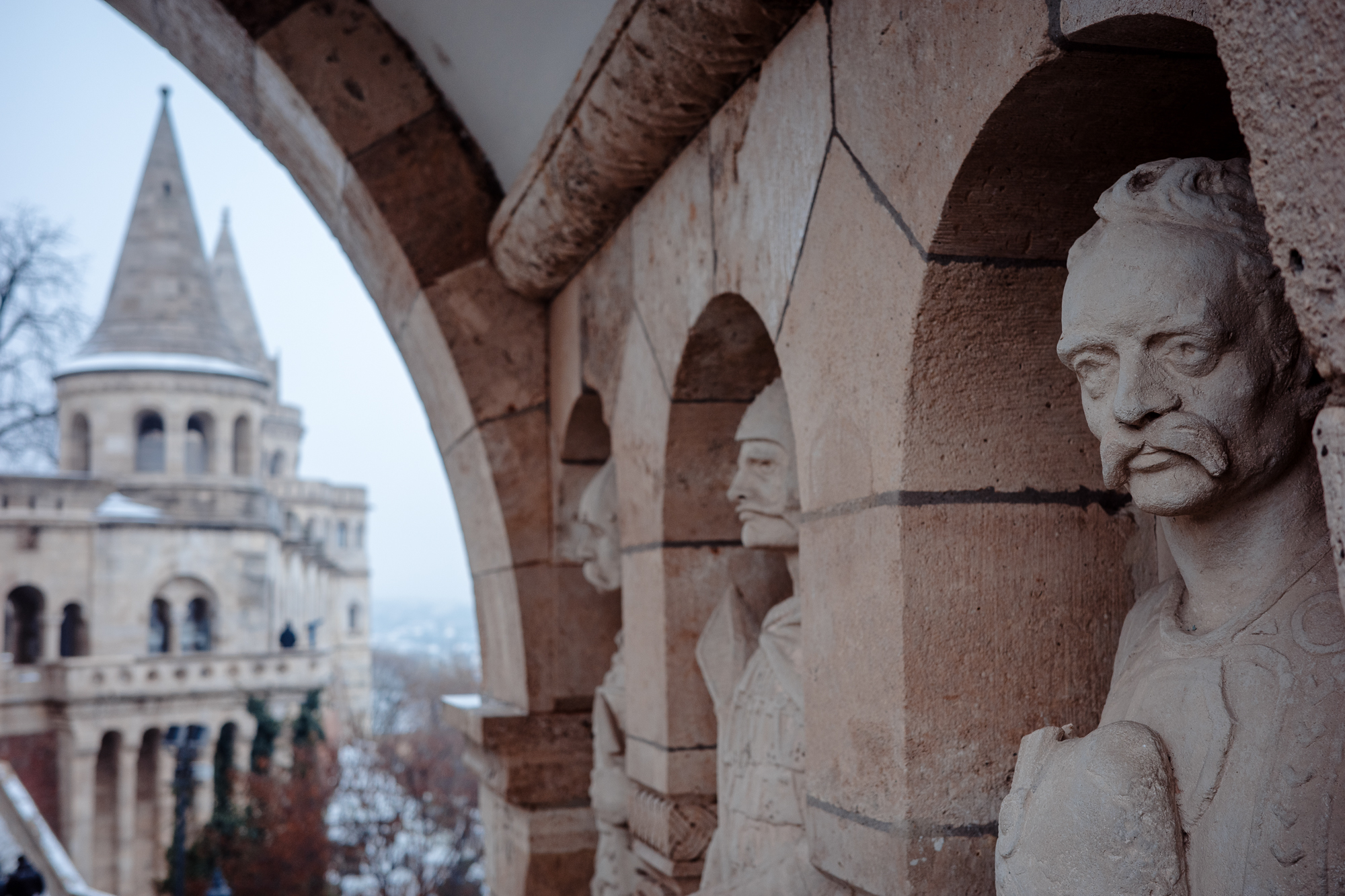
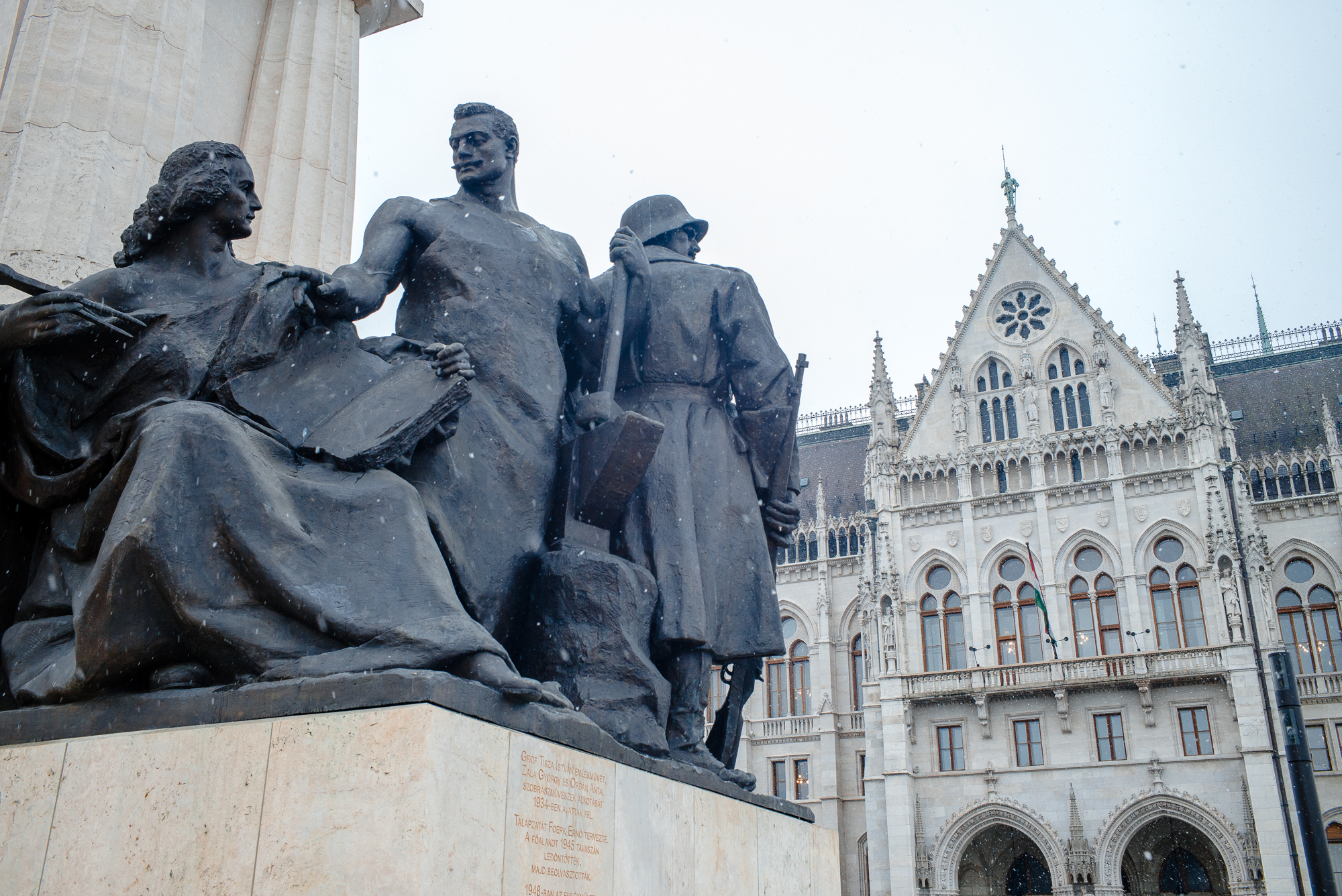
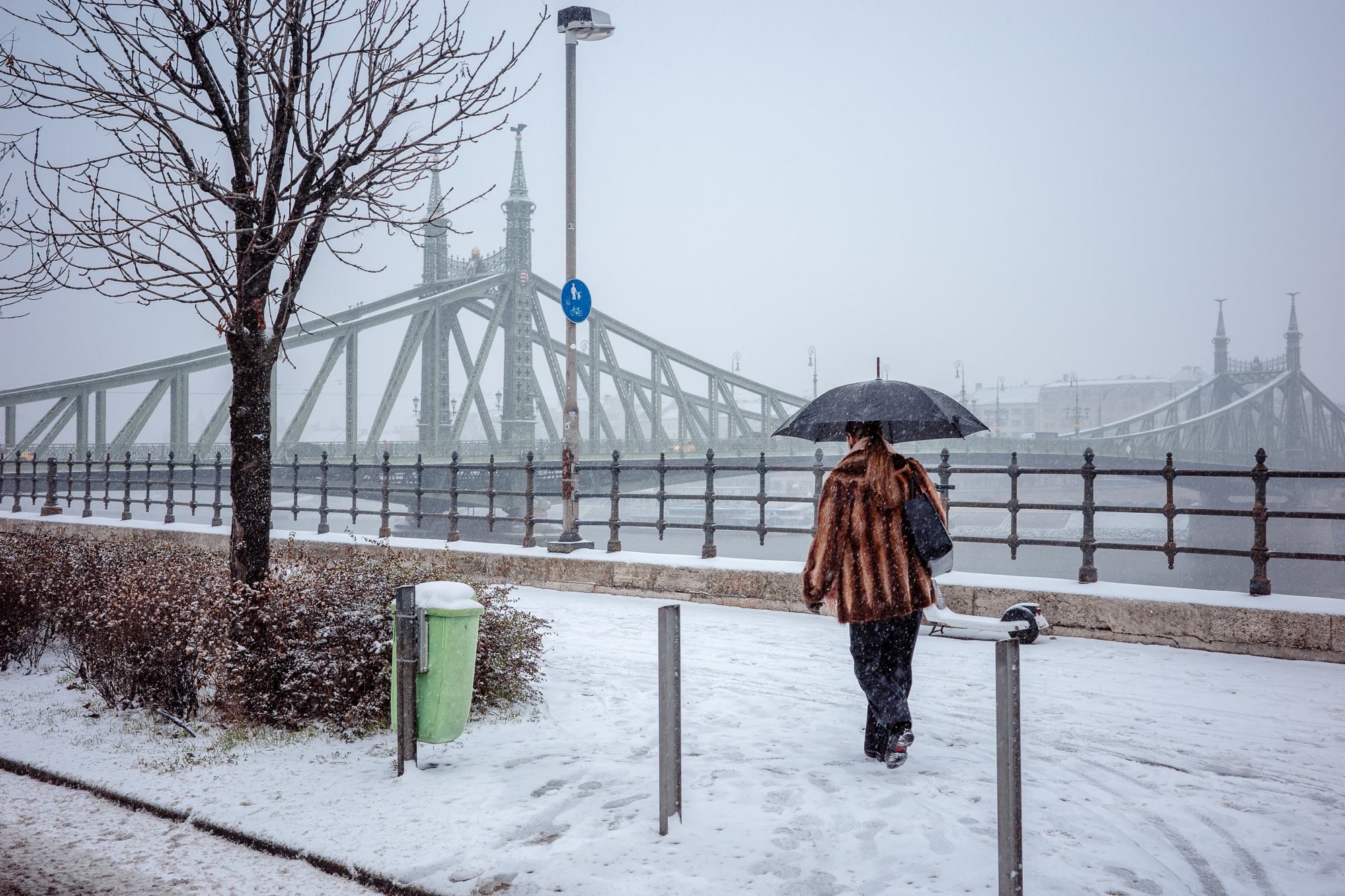
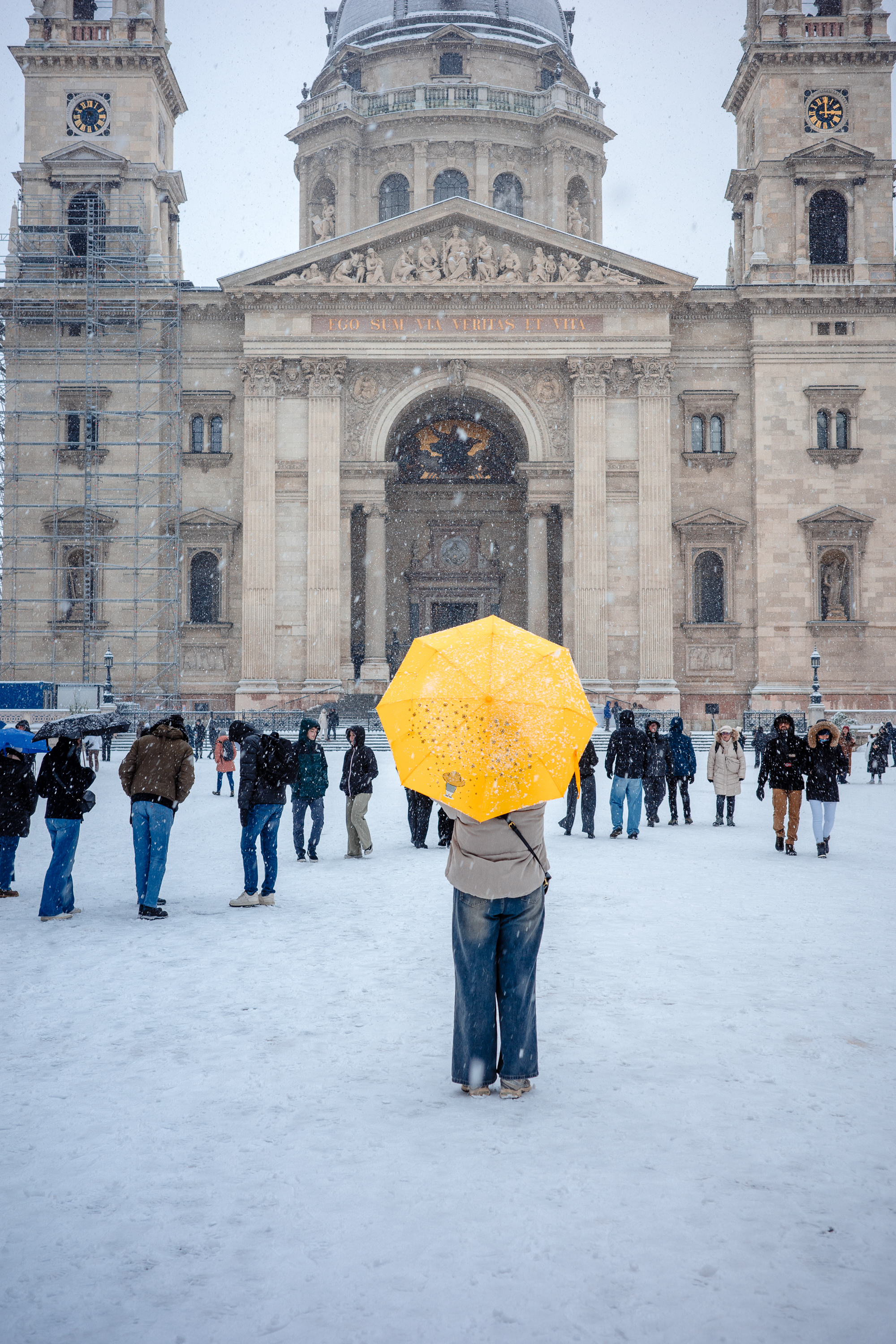
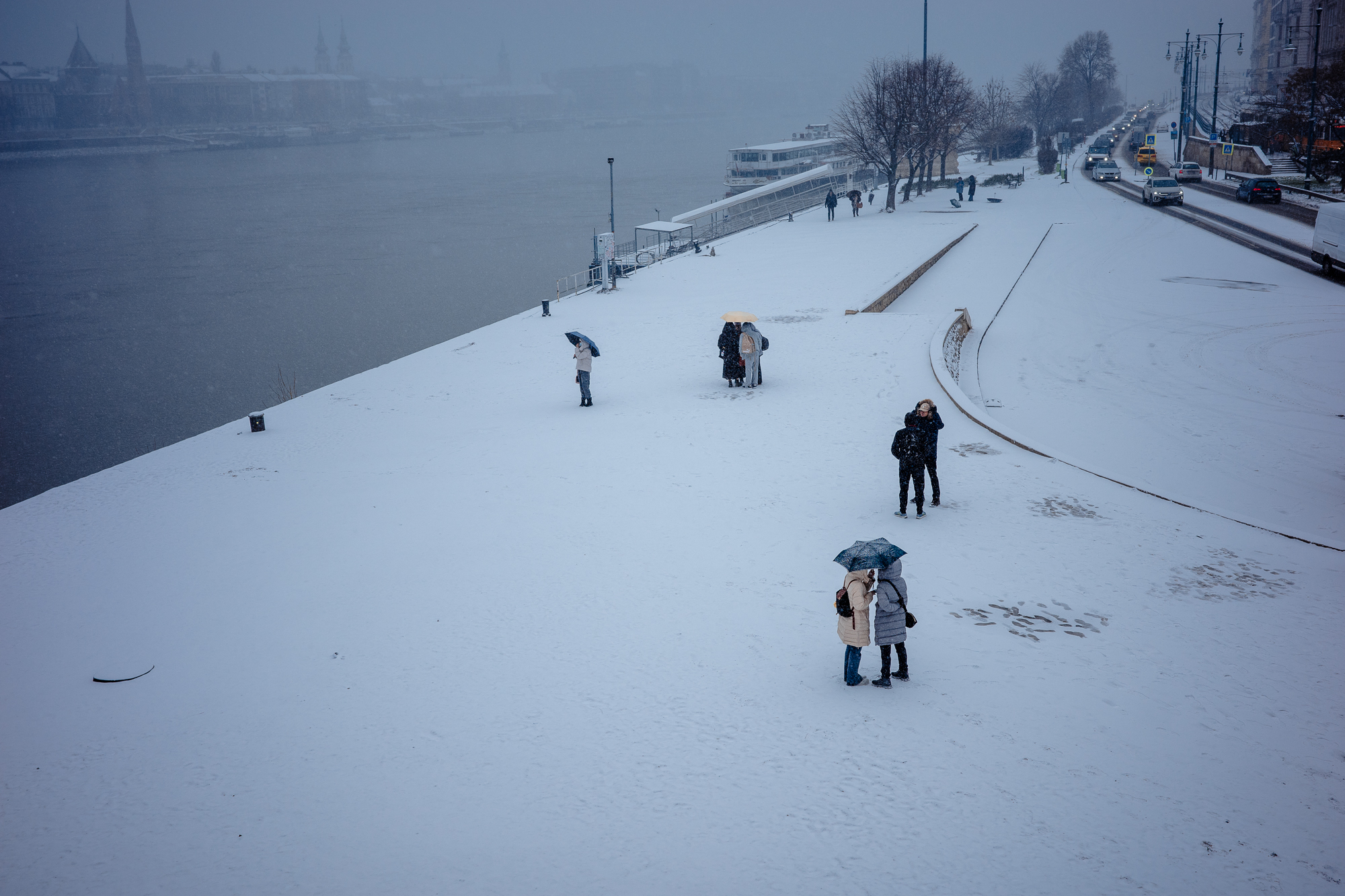
This was my first proper visit to Budapest — other than once passing through the airport. I arrived just as a cold snap dumped a thick layer of snow on the city, which hung around for about 24 hours before quietly melting away again. The weather seemed to keep many tourists inside their hotels or museums, which meant the streets were relatively calm. Perfect conditions for wandering without much of a plan.
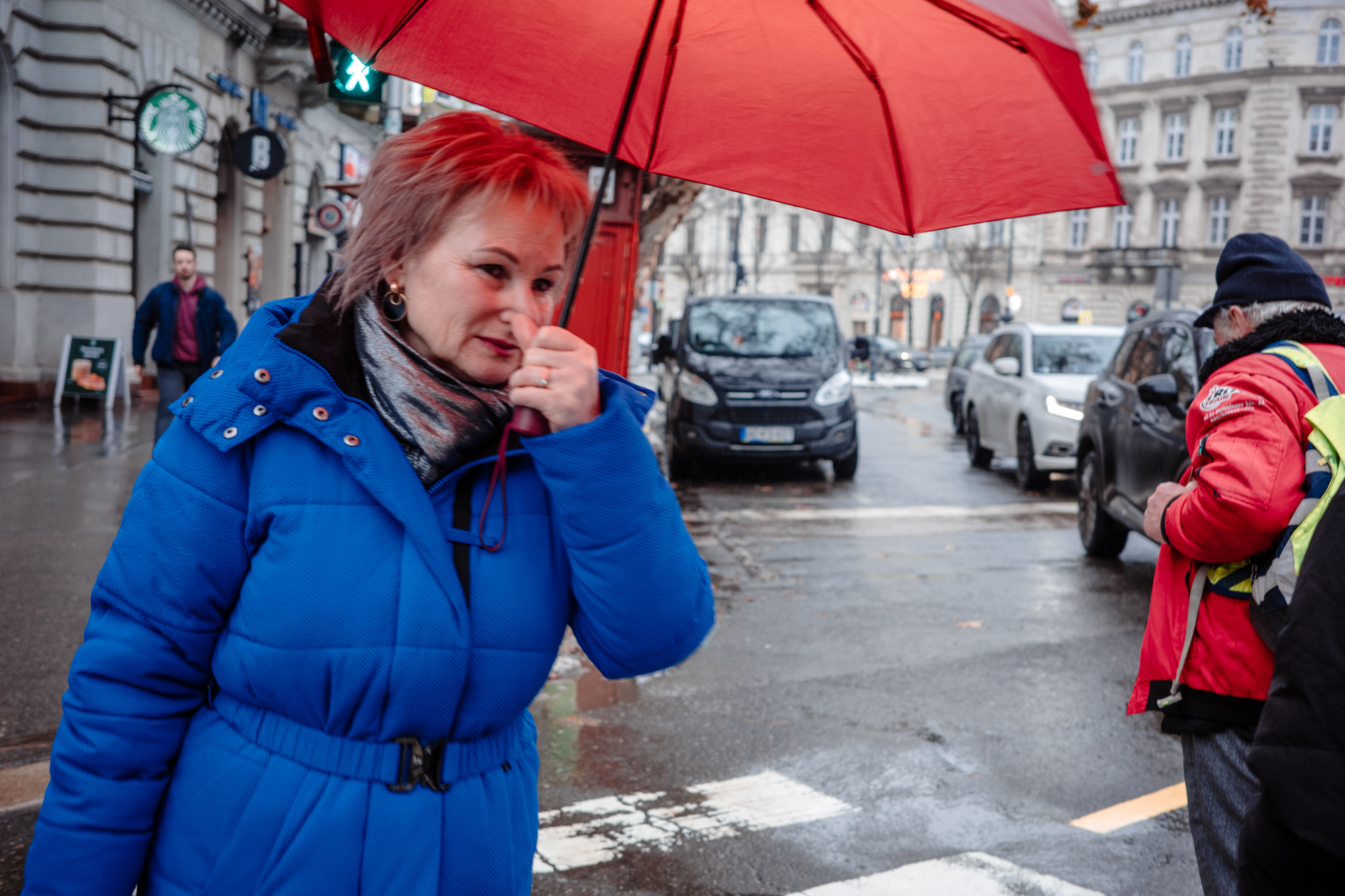
My preferred method (or lack of method) is a photo-flâneurism that is mostly about following the light — following the street where sunlight is coming from the side (when it isn’t hidden by snow clouds) — and choosing whichever option looks more interesting at each junction. There’s a saying I half remember about the “joy of being lost in the right direction”. That’s more or less the idea.
Aside from this wandering I also visited a couple of post-war Soviet-era housing estates (Kelenföld and Újpalota) using maps from the excellent Panel Walks Budapest website. There’ll be separate posts to follow with photographs from those walks.
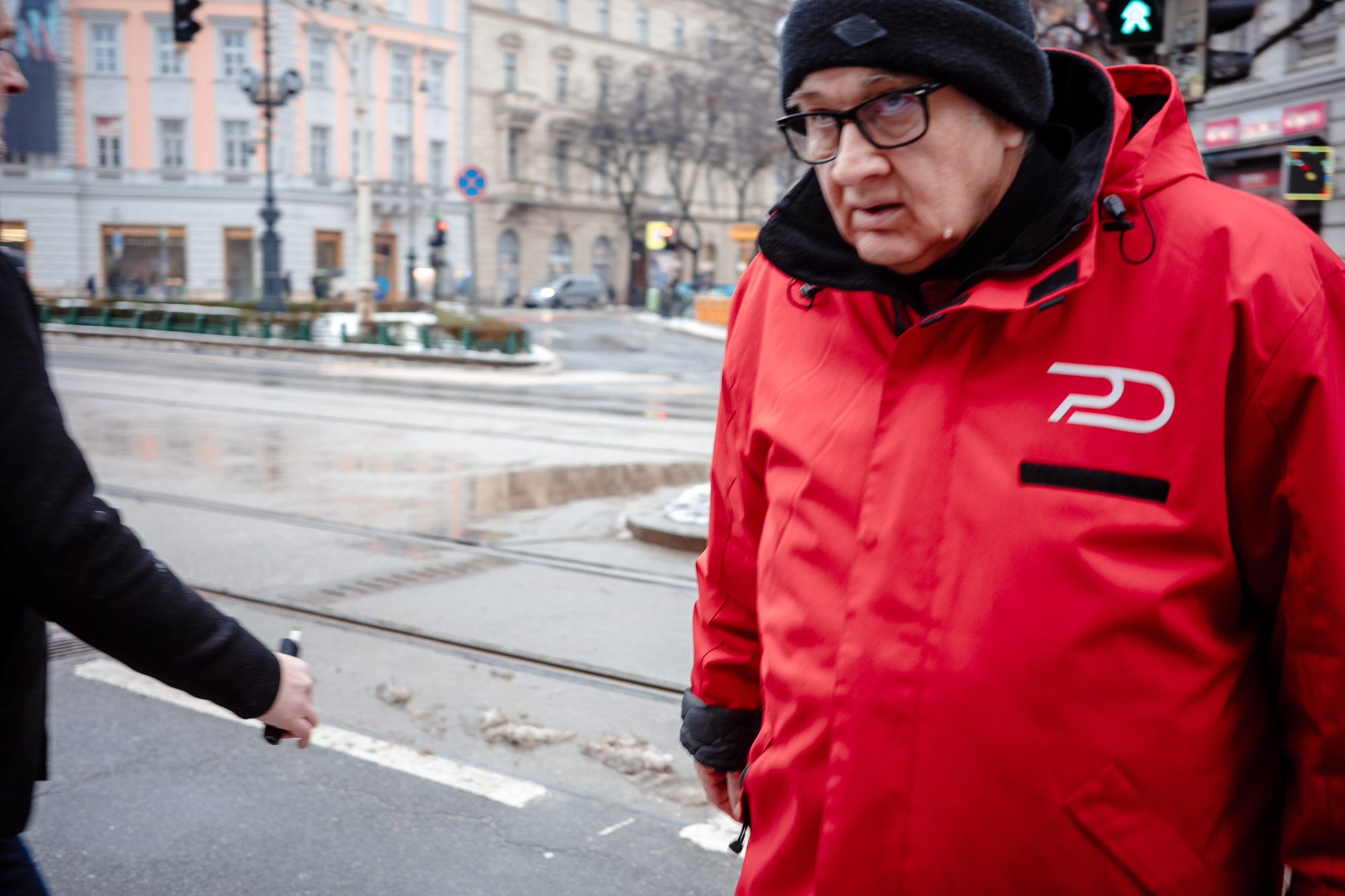
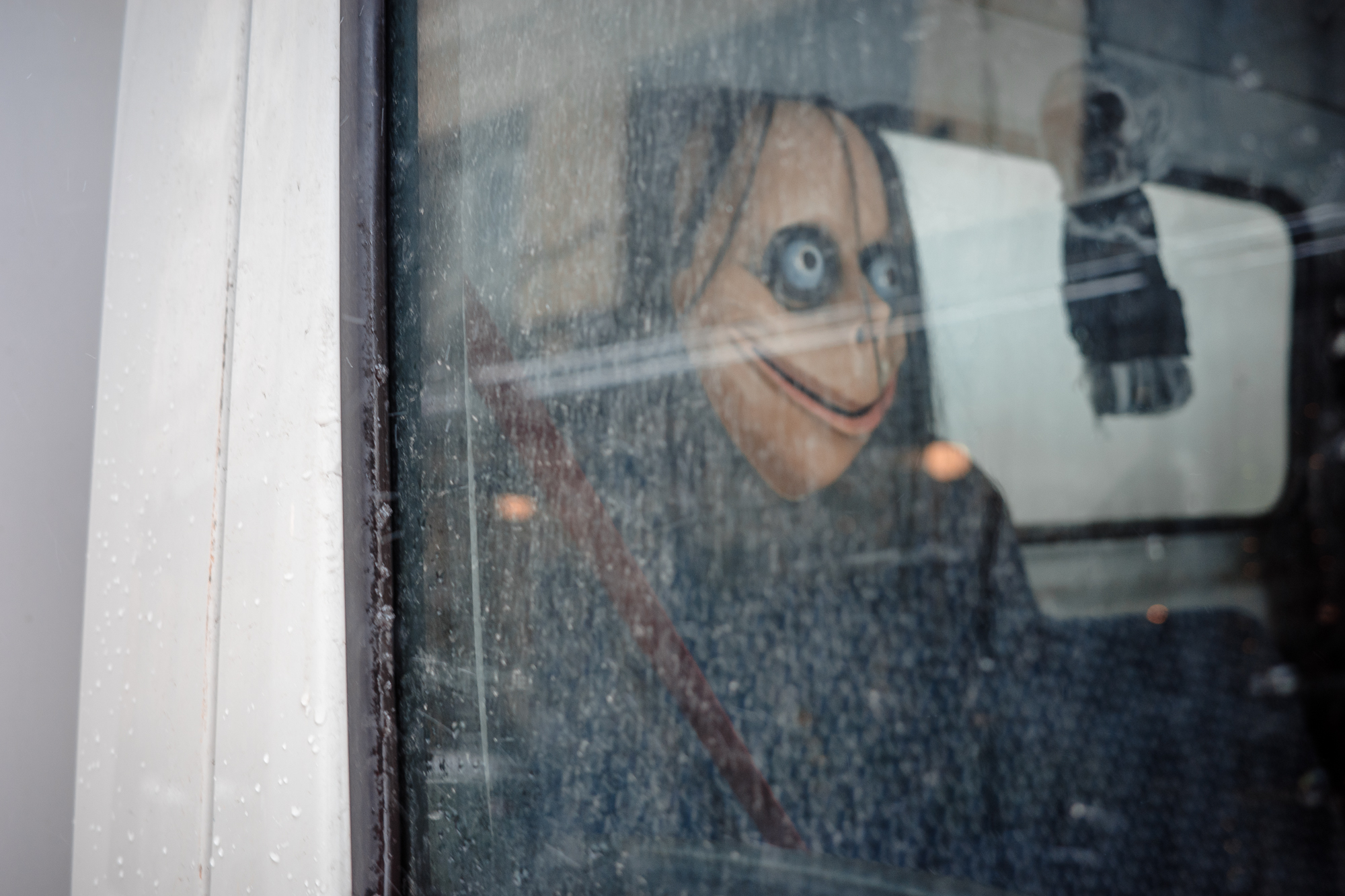
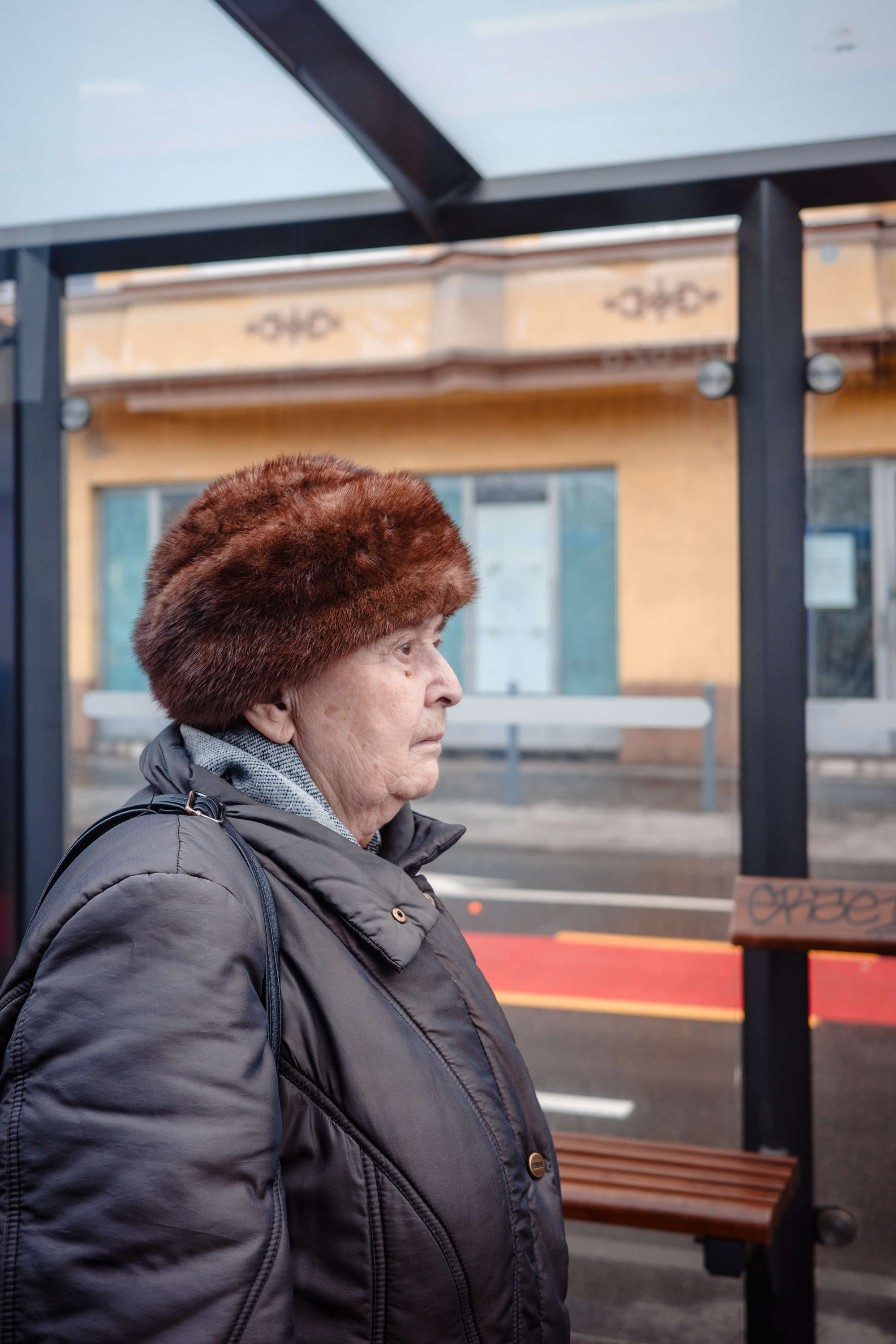
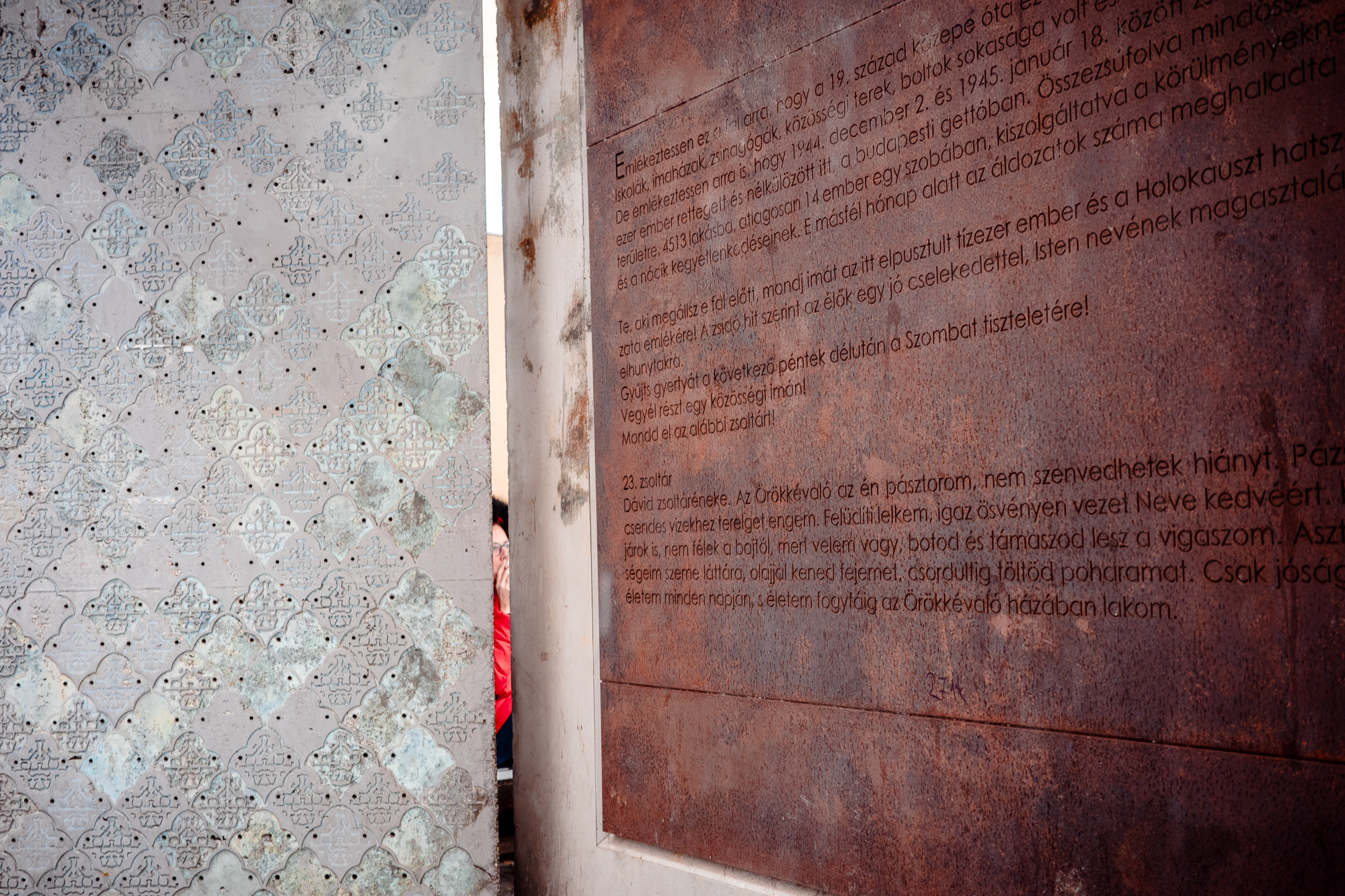
For cameras I carried my Ricoh GRIIIx and a Leica M262, with 40mm and 35mm lenses respectively. The plan was to use the Leica as the main camera and keep the Ricoh for evenings or when travelling on public transport.
In practice the Ricoh saw far more use. It’s simply easier to shoot with — especially on the street. The small size, snap-focus functions and the ability to shoot from the rear screen rather than lifting the camera to your eye all reduce the small but important hesitation between seeing a picture and actually taking it.
The files from the Ricoh also look excellent. I have it set to produce a high-contrast black-and-white JPEG, while the RAW files are imported into Lightroom using Samuel Lintaro Hopf’s Streetlife preset. It occasionally pushes things slightly too yellow, but everything gets tweaked a little in Lightroom Classic anyway.
For the Leica I’ve built my own preset — similar, but not identical to the Ricoh look. The M262’s CMOS sensor does nice things with the red channel, so I try not to interfere with that too much. See if you can work out which photographs came from which camera.
Over the three and a half days I walked about 85km, which felt reasonable at the time but slightly less so when I looked at the number afterwards. It did work up an appetite!
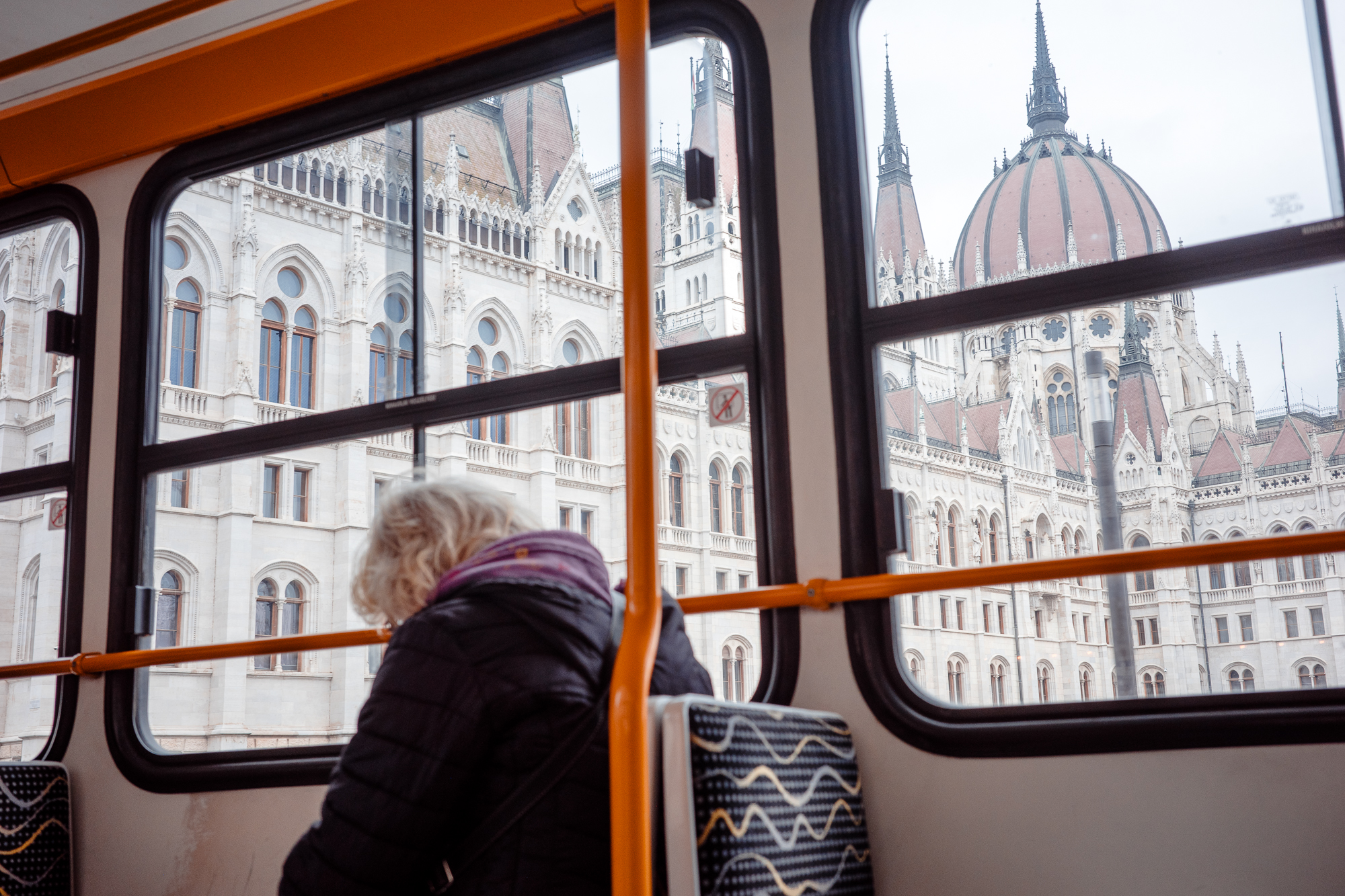
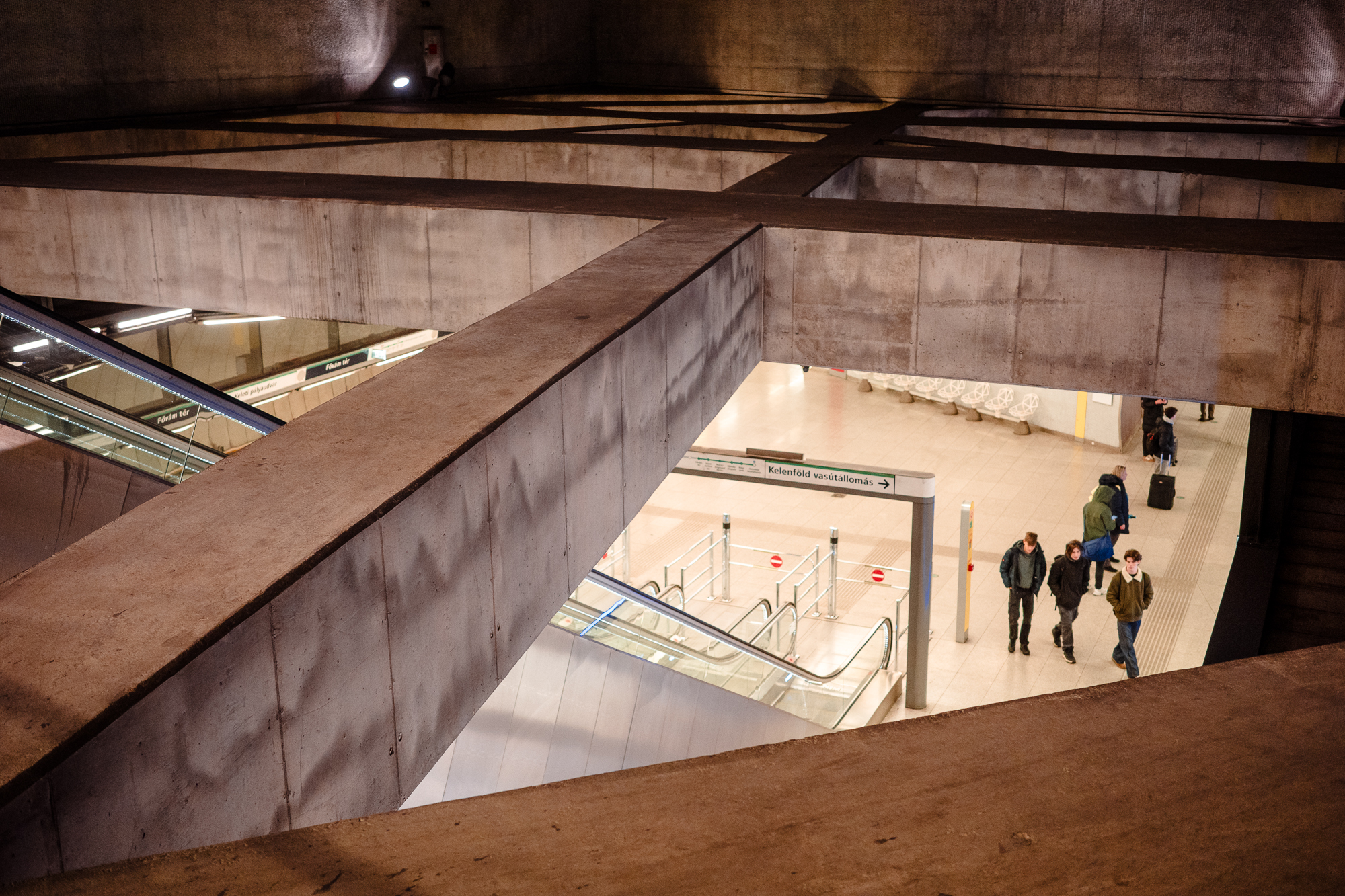
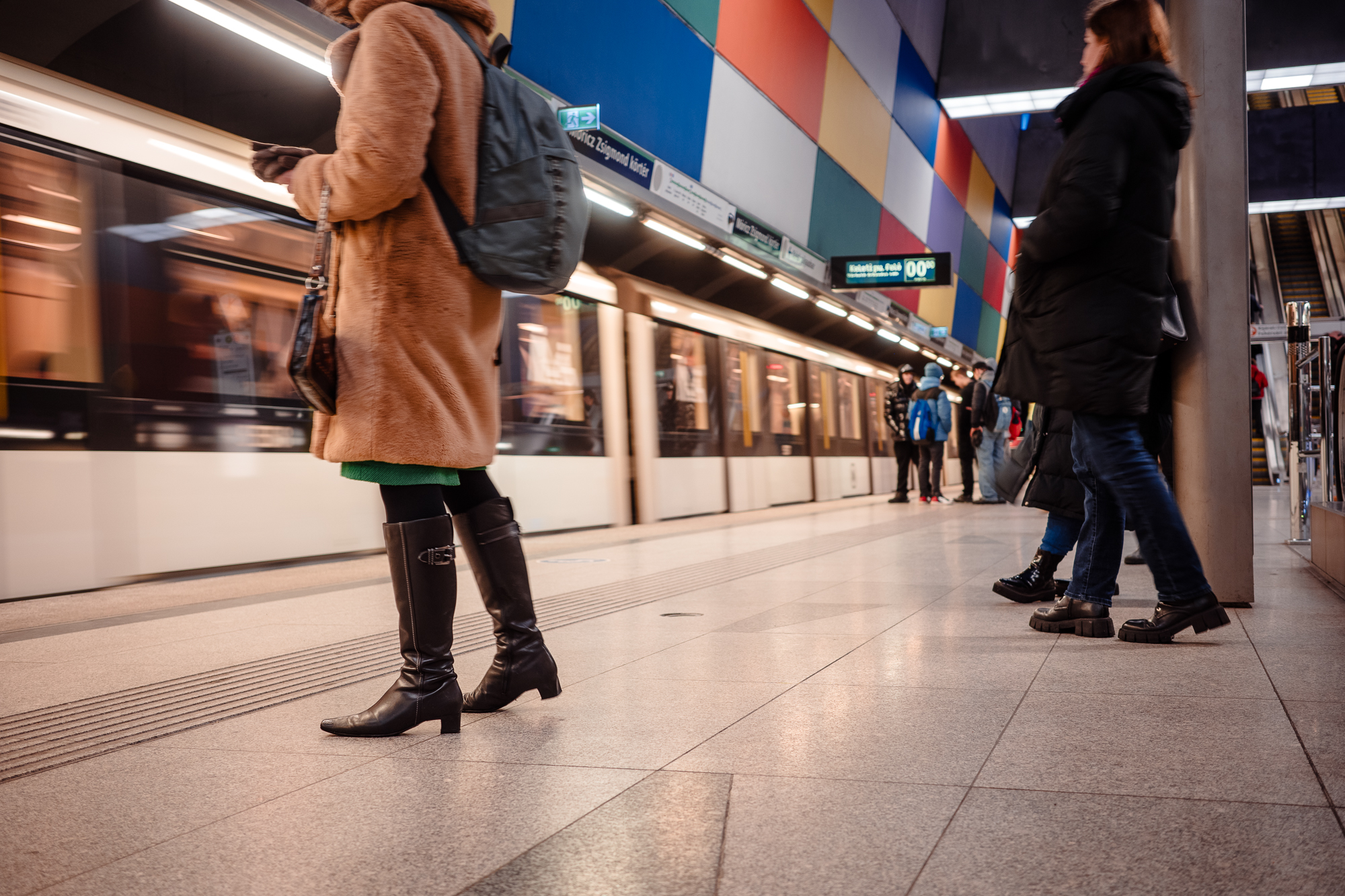
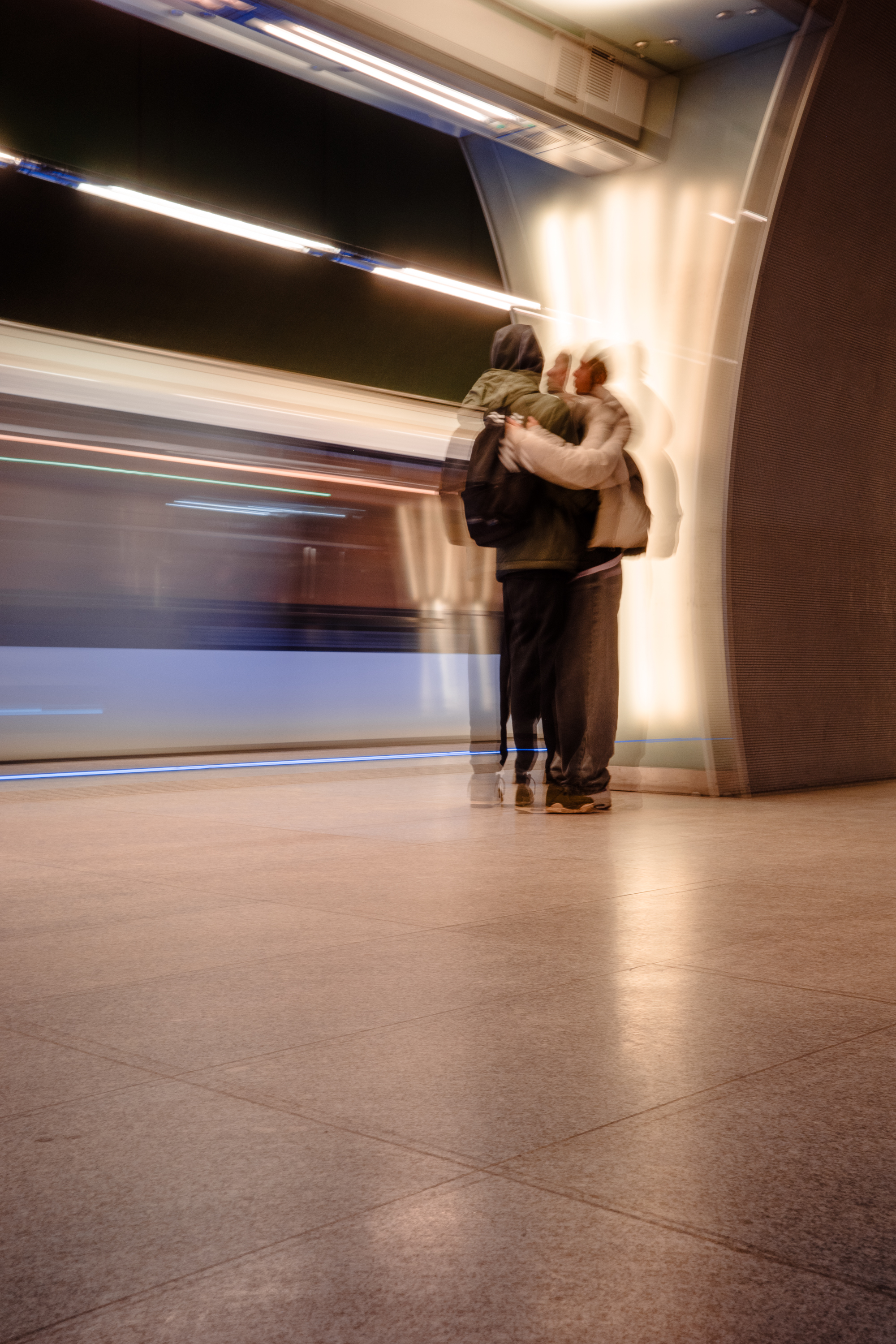
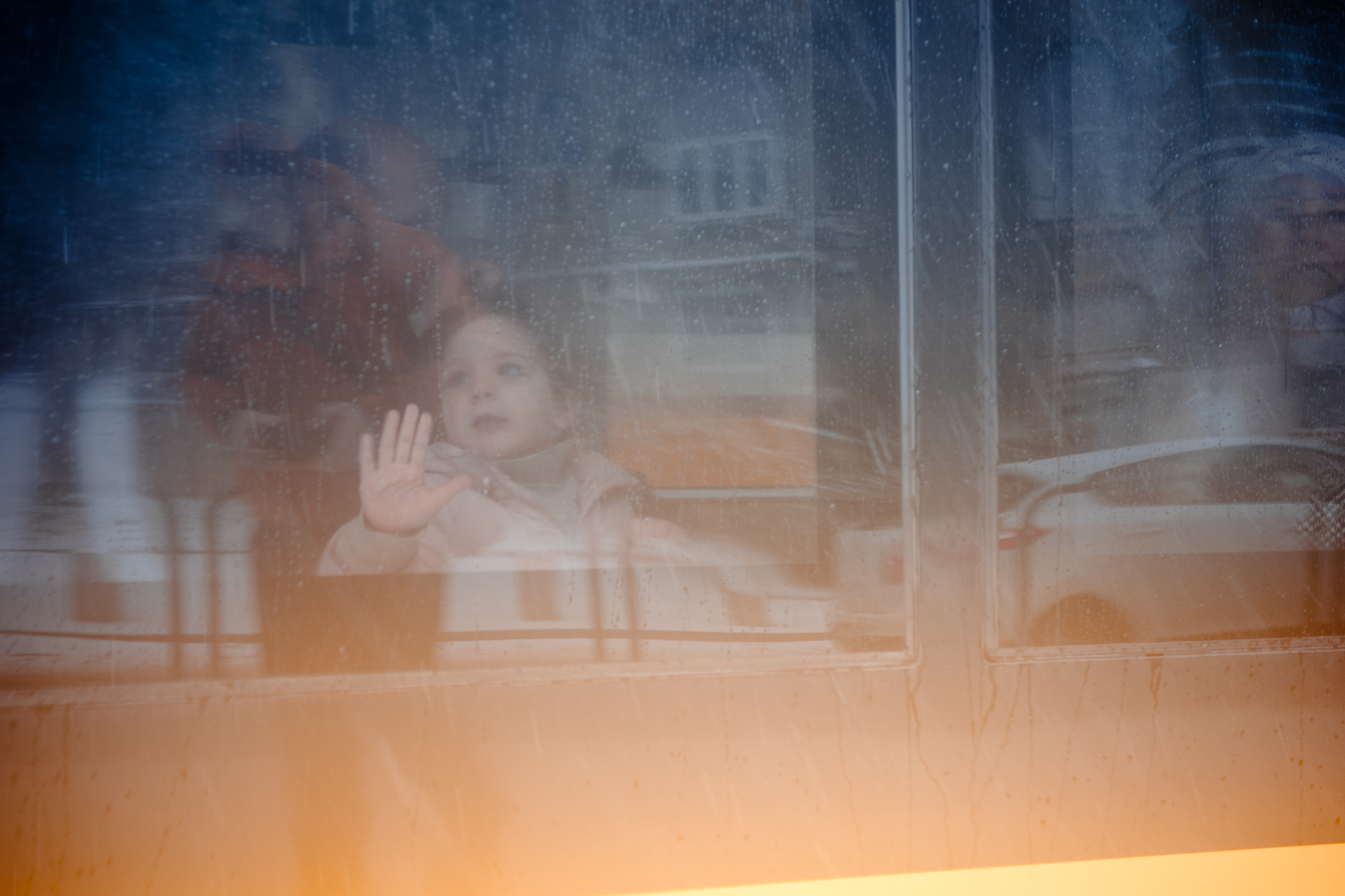
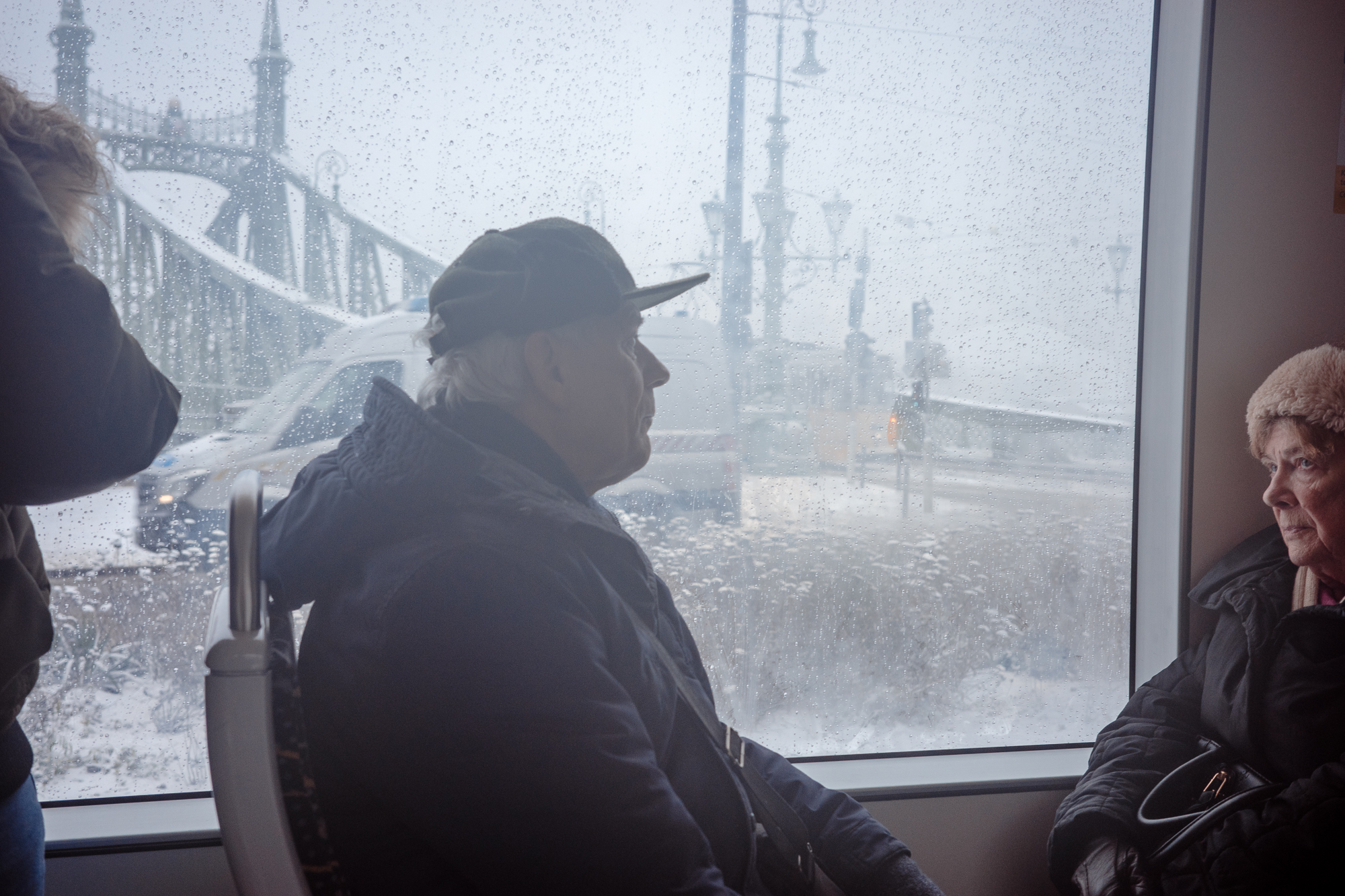
Another thing that I loved about Budapest was the public transport. One ticket covers trams, metro and buses and everything can be planned through the excellent BudapestGO app. The M4 metro line in particular is one of my favourite pieces of concrete infrastructure anywhere. Each station is a functional but stylish piece of concrete art.
One morning I took a trip along the entire line, getting off at every stop to wander around the station before getting back on and heading to the next. Try doing that with an eleven-year-old.
Budapest is a wonderful city to photograph — historic, layered and endlessly interesting if you’re prepared to wander without much of a plan. And, thanks perhaps to the weather, it was relatively quiet.
Most notably, the number of preening Instagrammers obstructing majestic views with their own carefully angled pouts seemed lower than in most European capitals. (Prague last year was the absolute worst I’ve ever seen for this — entire crowds queuing up to photograph themselves rather than the city.)
Travelling alone like this has its pros and cons.
On the plus side I can make my own choices and go wherever I want. It reduces life to a few very simple questions. Have a lie-in one morning, stay out late the next night. Walk another ten kilometers or stop for a beer. Eat an Indian meal if I feel like it.
It also makes the actual travelling surprisingly stress-free. On this trip I took cheap flights and the whole process felt remarkably calm — no worrying about whether everyone has their luggage, coats and assorted gear, no shepherding people on and off planes, no headcount every five minutes.
The downside, of course, is that there’s no one there to share the experience with, and as you can imagine, I was careful not to sound too enthusiastic when reporting back at home after a few days away while the rest of the family had been living with dust, smells and builders.
Mostly though, I enjoyed a few days with a very simple agenda: walk, take pictures and find a decent beer in the evening. It felt like a slightly indulgent luxury.
There’s something about walking long distances through an unfamiliar city that seems to reset the mind a little. After weeks spent thinking about paint finishes, tile grout and socket positions, it was refreshing to reduce the day to much simpler decisions — which direction to walk, where the light was falling, whether the next street might be more interesting than the last.
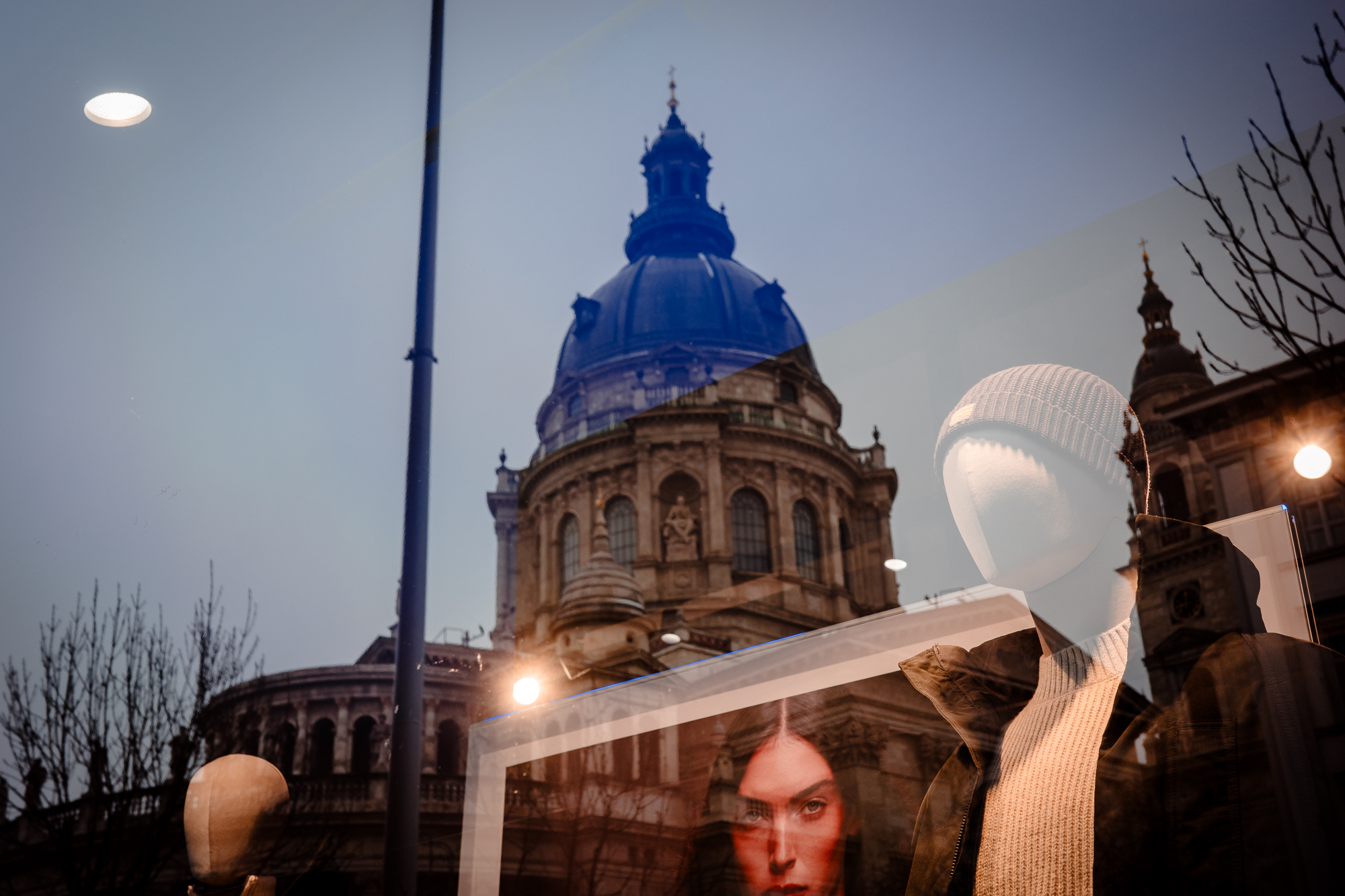
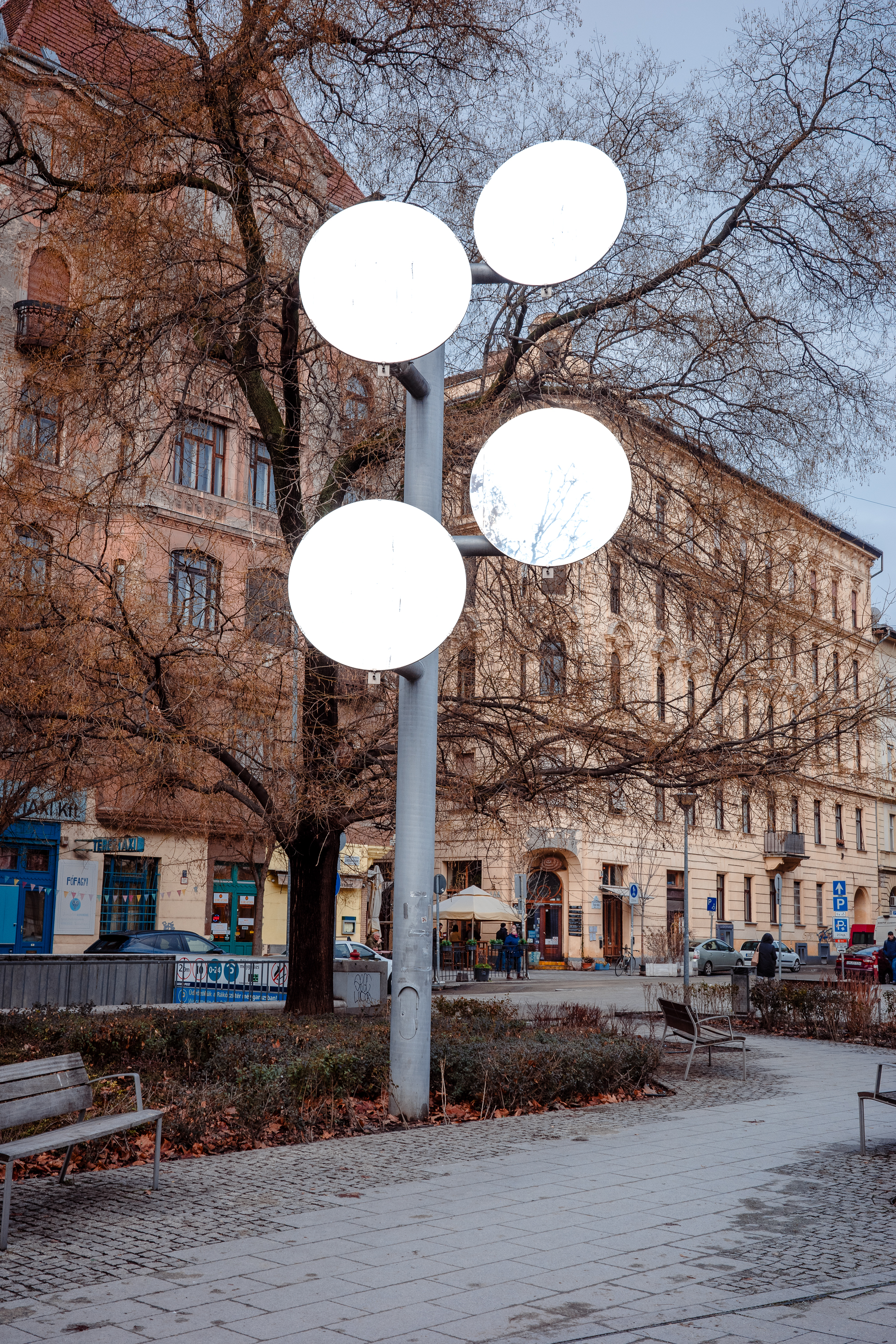
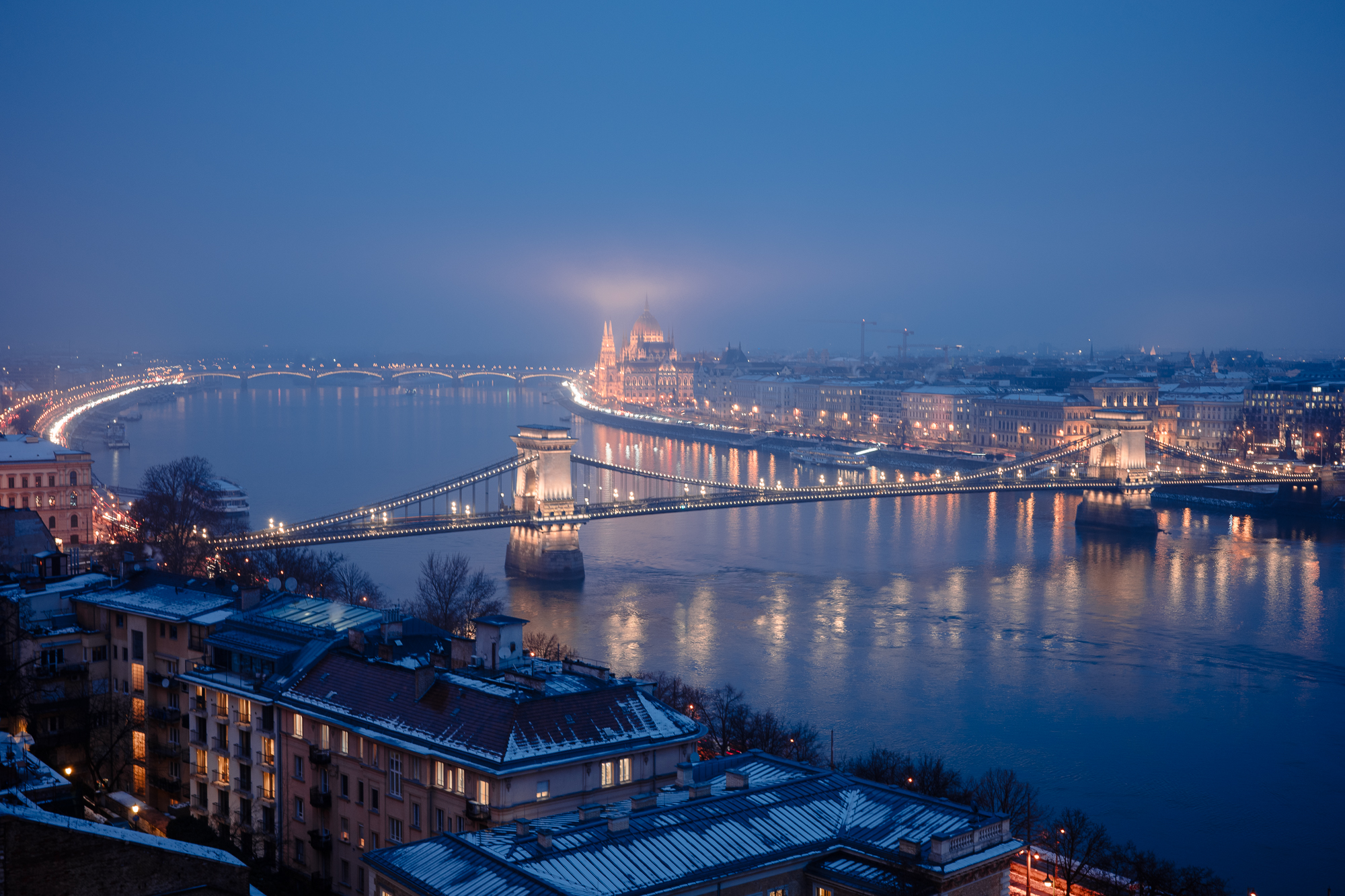
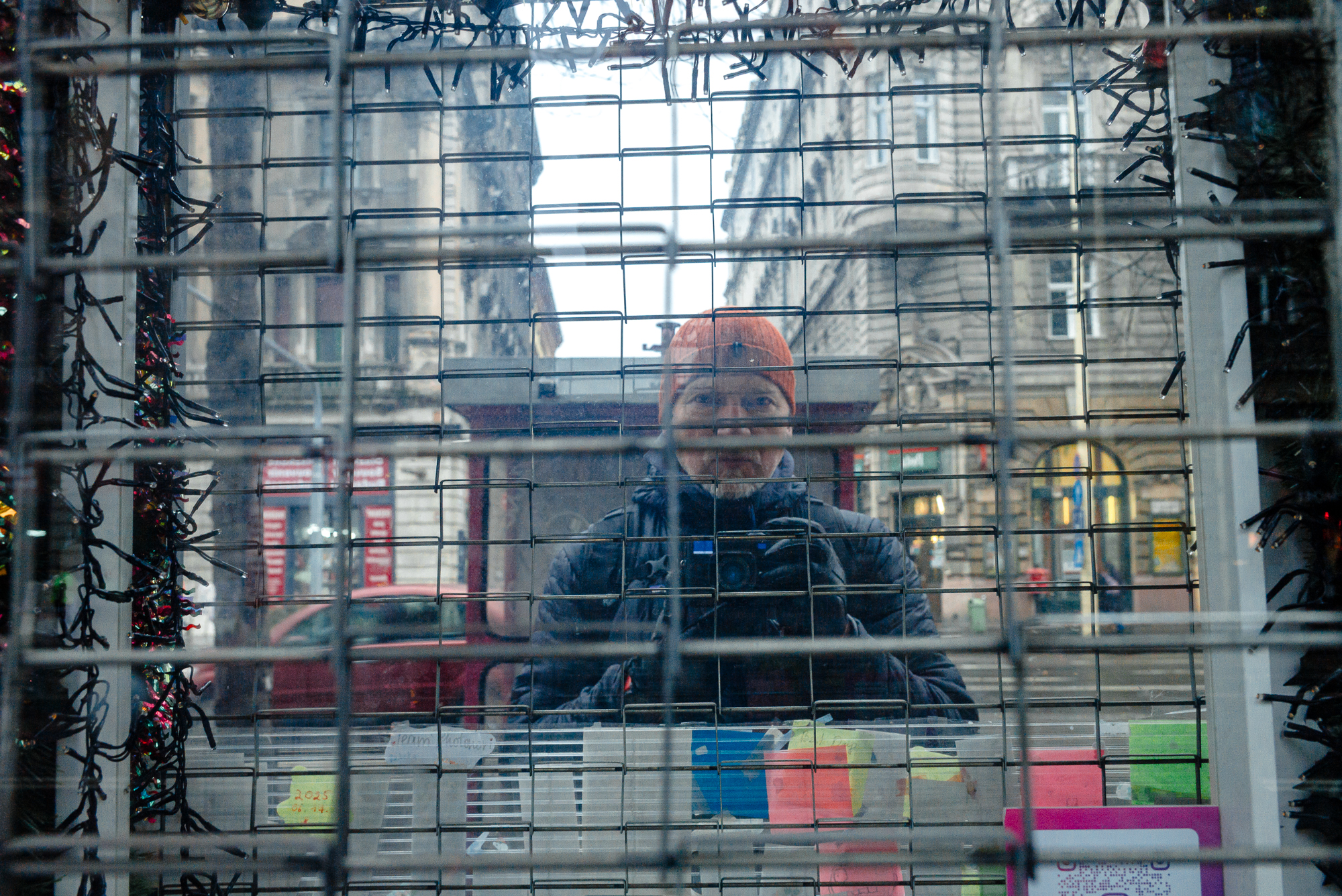
I’m happy with some of the photographs I came home with. More importantly, after a long break from photography, I can feel something slowly coming back — the instinct for noticing pictures again.
 Barnaby Nutt
I like the photo with the yellow umbrella best. It’s a nice contrast to the weather and the heavy stone building.
I go to Seoul by myself twice a year to enjoy a stress-free trip where all the decisions are mine alone. I can turn left, I can turn right, I can walk in circles and no one complains. Like yourself, I try not to make it seem like I’m enjoying myself too much when telling the missus about my travel.
LikeLike
Thanks for looking. Seoul sounds good, but a bit far for a weekend trip!
LikeLike
We visited Budapest in December. Officially we went for the Xmas markets but it turned out way more interesting than just that. We both really enjoyed it and like you we spent a lot of time exploring on foot but I’d say we were a lot less organised than you were. Despite it being a relaxing holiday we still managed to walk almost 55km in 3 days. It’s one of those cities where it feels good to wander and thankfully the weather was good enough to do that on foot. It’s a city I’d like to go back and revisit in a few years but this time I’d like to see it in late Spring/early Summer 😊
LikeLike