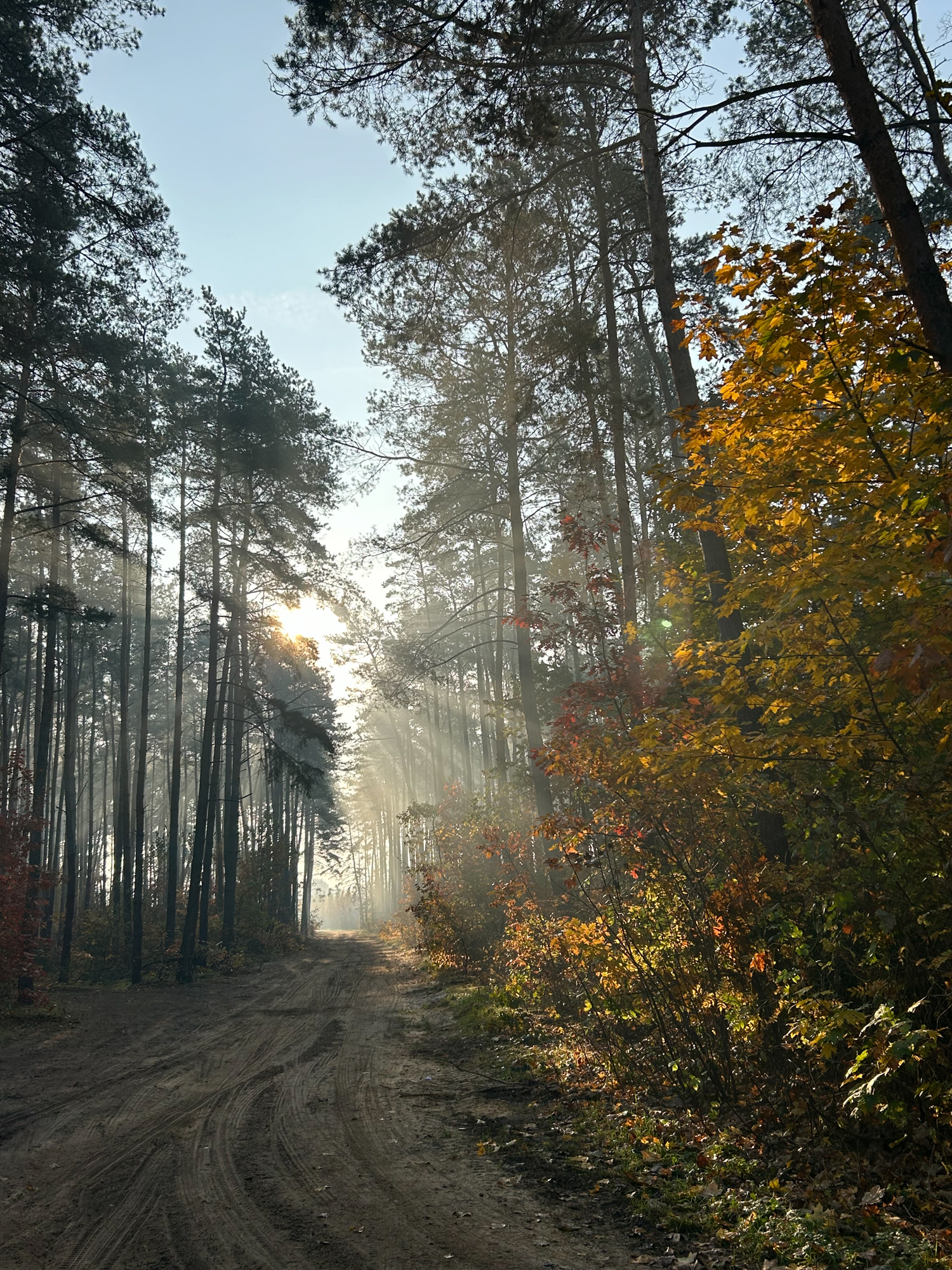
It’s 10 o’clock on a Wednesday morning and I’m back in the woods, about 600m from our new home in Poland. Red squirrels are chasing each other excitedly up and down, round and around a pine tree a dozen paces away. A couple minutes ago, a huge hare lolloped up the track towards me, before spending what felt like an hour looking deep into my eyes. He casually turned and headed back the way he’d come…
At the start of the year, I was looking for ways to fill my time as I slowly adjusted to our new life in Poland and the idea of not having to go to work every day. Sometime in the first week of January, I came up with the concept of spending “a year seeing” (it probably needs a catchier name). The plan was to slow down, to become more aware of my surroundings and to learn the names of the flora and fauna in my new environment.
I’ve always spent time outside, but I’d usually be rushing through nature to tick off a Strava segment, or to complete a long hike to keep to a camping schedule. Daftest of all, was getting outdoors and then messing around with cameras and GoPros to show other people what I was doing, at the expense of truly engaging with nature myself.
I decided to begin my year with birdwatching, something I had enjoyed as a child. Back then, I was a member of the Young Ornithologists’ Club and proudly wore my blue Y.O.C. patch sewn onto my green parka. While I’d been away from the passtime, it seems to have rebranded to ‘birding’ to make it seem a little less geeky. Birdwatching seems to have a bad name, being associated with trainspotters, stamp collectors and other obsessive hobbyists: all harmless but slightly odd.
I believe that taking an interest in nature is different. A couple of generations ago, this knowledge would have been innate and more valued in everyday life. Perhaps this lack of familiarity and understanding of the human’s place in the world leads to some of the issues we have as a species.
Anyway, I’d start with birds, then move on to trees, butterflies, insects, the night sky and perhaps some of the environmental history of my new habitat.
Another contributor to my plan was a book recommendation in the form of Lev Parikian’s Why Do Birds Suddenly Disappear? in which he attempts to see 200 species in a year. Without reading the book, I thought, Oh yeah, I could do that! But when I finished it a couple of weeks later, I realized he had set himself some strict limits—only counting birds seen in the UK, for example—whereas I would be happy to count birds wherever I saw them. In the later stages of his quest, he also drove long distances on the off chance of spotting a particular species, carefully researching locations and drawing up target lists.
I would be much more laid-back about my 200. If I reached that number, great. If not, I wasn’t going to burn up any mileage chasing it. And so, on January 7th, I took a walk with a pair of binoculars…
In those dark days of January, when it felt like spring would never arrive and the black dog was sniffing around, my new hobby suddenly gave me a reason to get up and get out of the house, no matter how cold and miserable. I couldn’t exercise and felt awful most days. Without work and the daily challenge of managing a ‘diverse and demanding’ team of people through the nonsense of corporate life, I needed something to keep me occupied.
Now, two and a half months in, I’ve seen my 100th species (a stonechat). On the surface, that suggests I’ll reach 200 by midsummer. But, of course, the low-hanging fruit—sparrows, starlings, great tits—can only be counted once, no matter how many times I see them out of the window.
Without fully understanding the concept of ‘being present’, I realized that when I’m in the forest, trying to identify a some distant brown blob only by its song, there’s no room for the darker thoughts of self-worth or if we’d made the right decision to move. Instead, there’s something pretty absorbing about leaving the house with a pair of binoculars and wandering into the forest or to the nearby fish ponds, with only the goal of seeing a new species – getting another tick towards my 200. Constantly listening, paying attention to the sounds of the landscape, there’s no room for the mind to drift.
Thinking again about Parikian’s high-mileage quest. Instead, I’ve found that getting to know our area thoroughly, walking it daily, means that when a new species arrives, exhausted from its journey from sub-Saharan Africa, I’ll notice it quickly. I’ll hear the unfamiliar call, recognize that something has changed, then set about tracking it down.
For example, last Tuesday, the woodlarks arrived. I’d not heard them until then, but since, they’re there as soon as I step outside. I now know what they look like, how they sound and where to look when they’re singing out their sweet but melancholy, accelerating song.
Likewise, over the first couple of months of the year, tens of thousands of tundra bean geese have wintered in the area, before migrating north to Scandinavia and Russia. Seeing them every day meant I could spot shifts in their behaviour. As the season progressed, they became more restless, forming large evening gatherings before suddenly taking off in one direction. It was as if the entire flock had reached a unanimous decision to leave, but then all honking loudly in (dis)agreement about which direction they should be headed.
I’m enjoying this new and rapidly developed familiarity, and I’ve found it more rewarding than I’d ever imagined. This knowledge and freshly developed skills should be with me forever and wherever I go. But more than that, what I’ve learned is the value of slowing down and taking the time to not only look, but to see and to understand.
The books on trees and the night sky have arrived…
 Barnaby Nutt
Great read. Bird life is fascinating! It pains me they are so vulnerable today.
LikeLike
It’s a wonderful new hobby. Hope you reach your 200 lifers soon
LikeLike